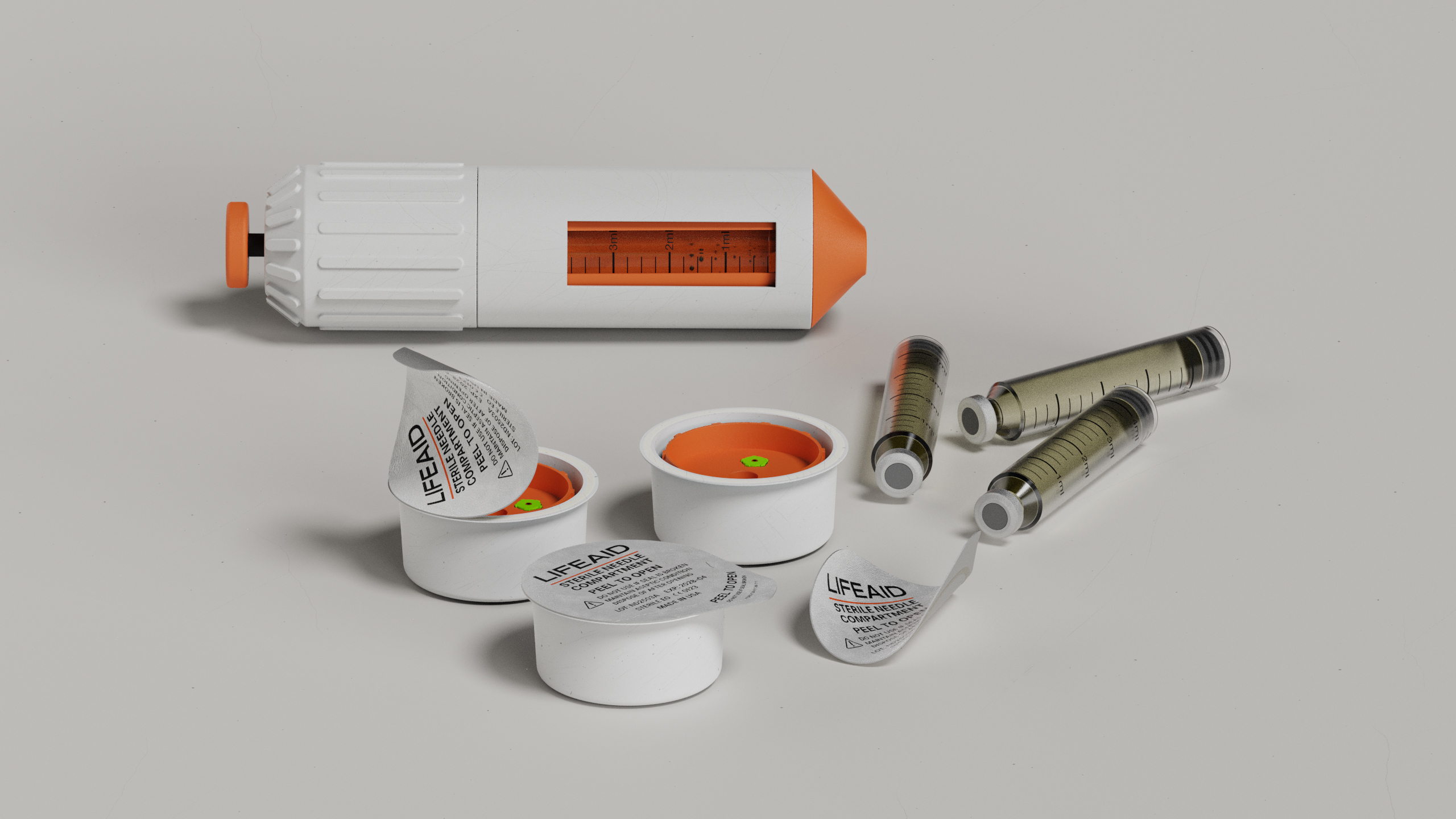
LifeAID
A pneumatic, rechargeable, multi-dose auto-injector for rapid deployment
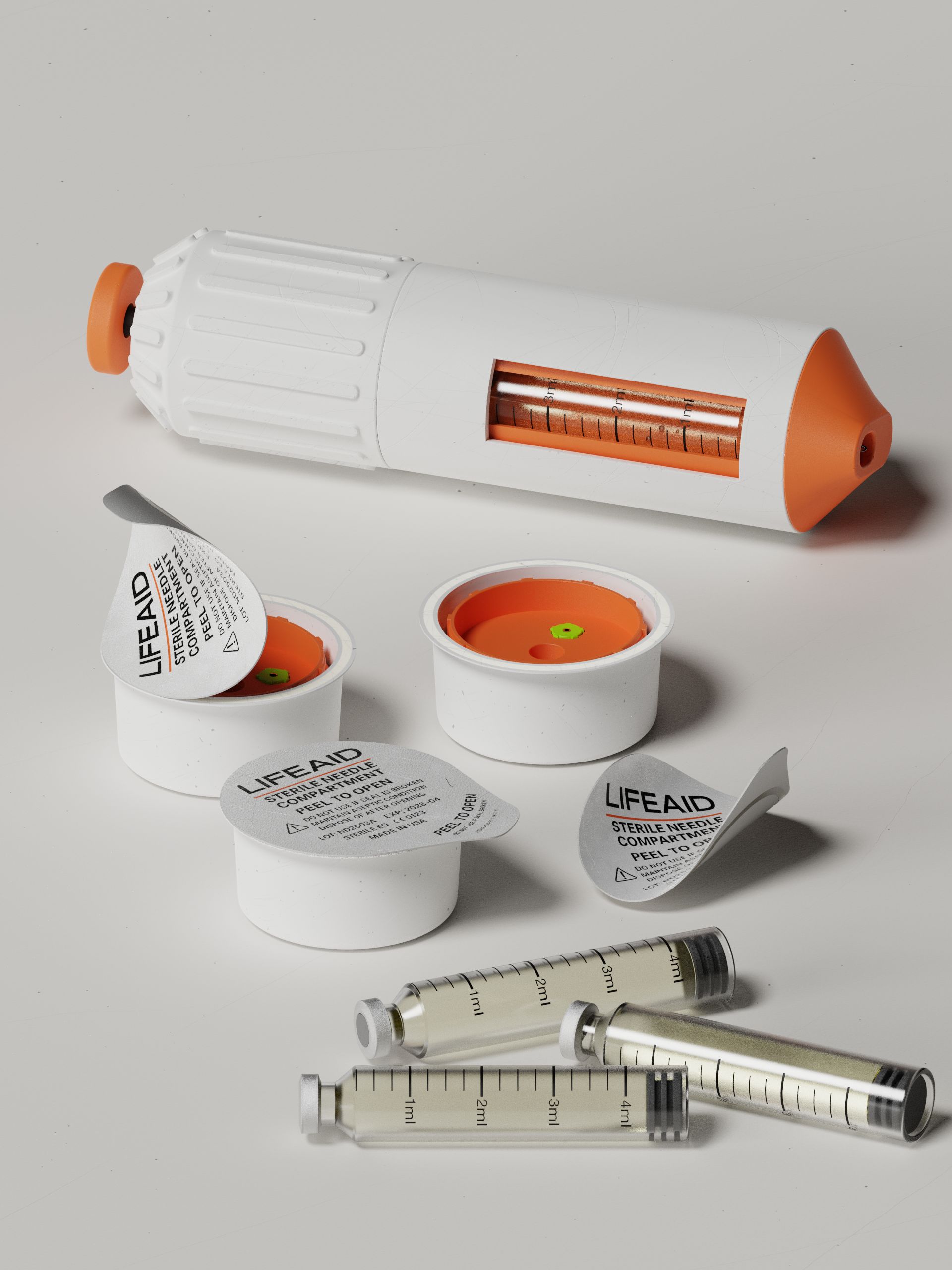
Most auto-injectors rely on spring-loaded, single-use mechanisms, but severe anaphylactic reactions may require repeated dosing within minutes. LifeAID is a pneumatic auto-injector concept with three replaceable cartridges, designed to deliver rapid sequential doses from one compact device when seconds matter.
Category Medical Devices
Date 2024
Duration 4 Weeks
Skills Design Research, Prototyping, Rhino, Keyshot
Severe anaphylaxis frequently requires repeat epinephrine.
Current single-use designs create critical delays in emergency care.

Traditional auto-injectors are limited by their one-and-done architecture. When symptoms persist, patients and responders are forced to find and prepare a new device, causing dangerous treatment interruptions when seconds matter most.
Objective
Designing a reliable, multi-dose auto-injector that ensures continuous care during severe allergic reactions.
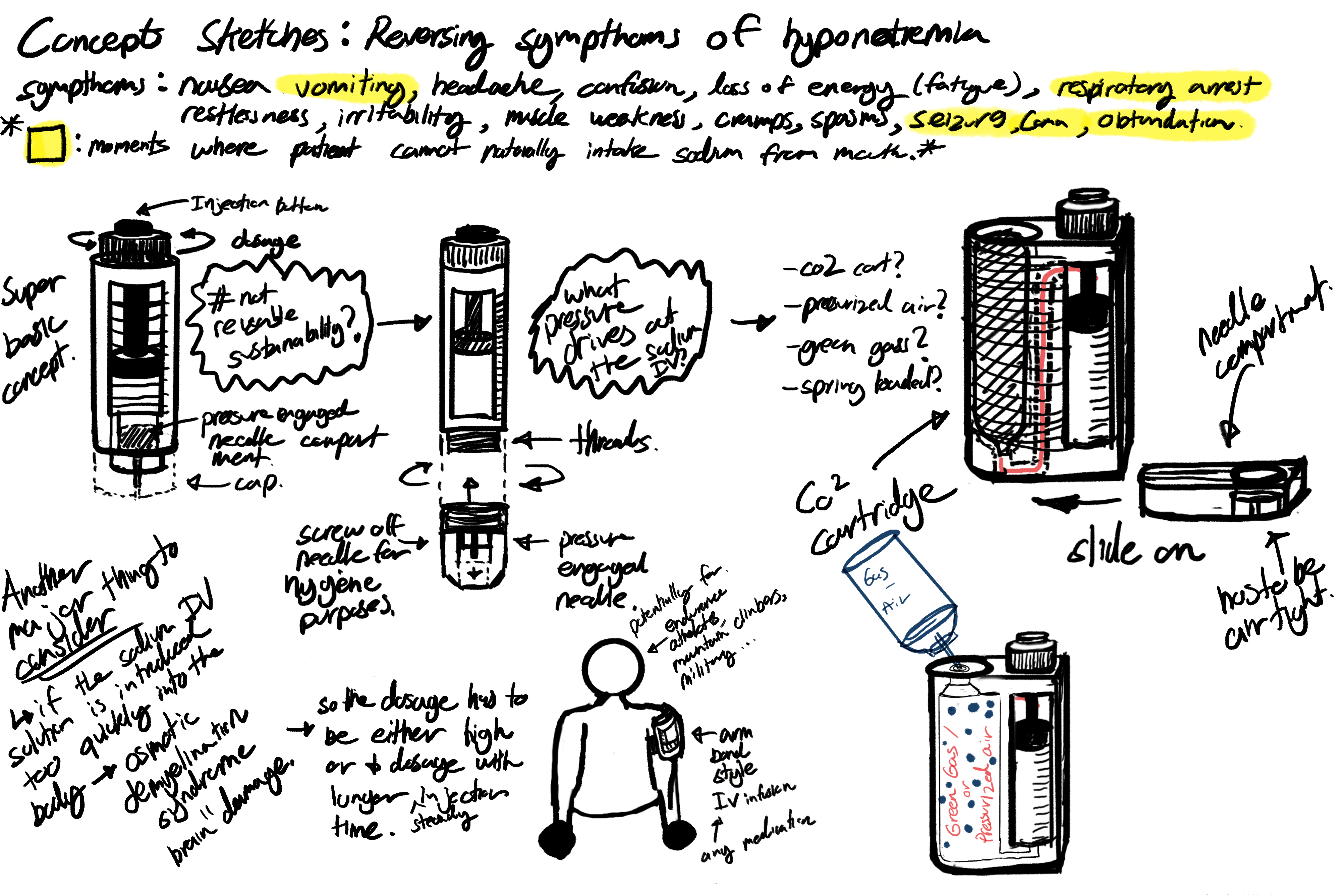
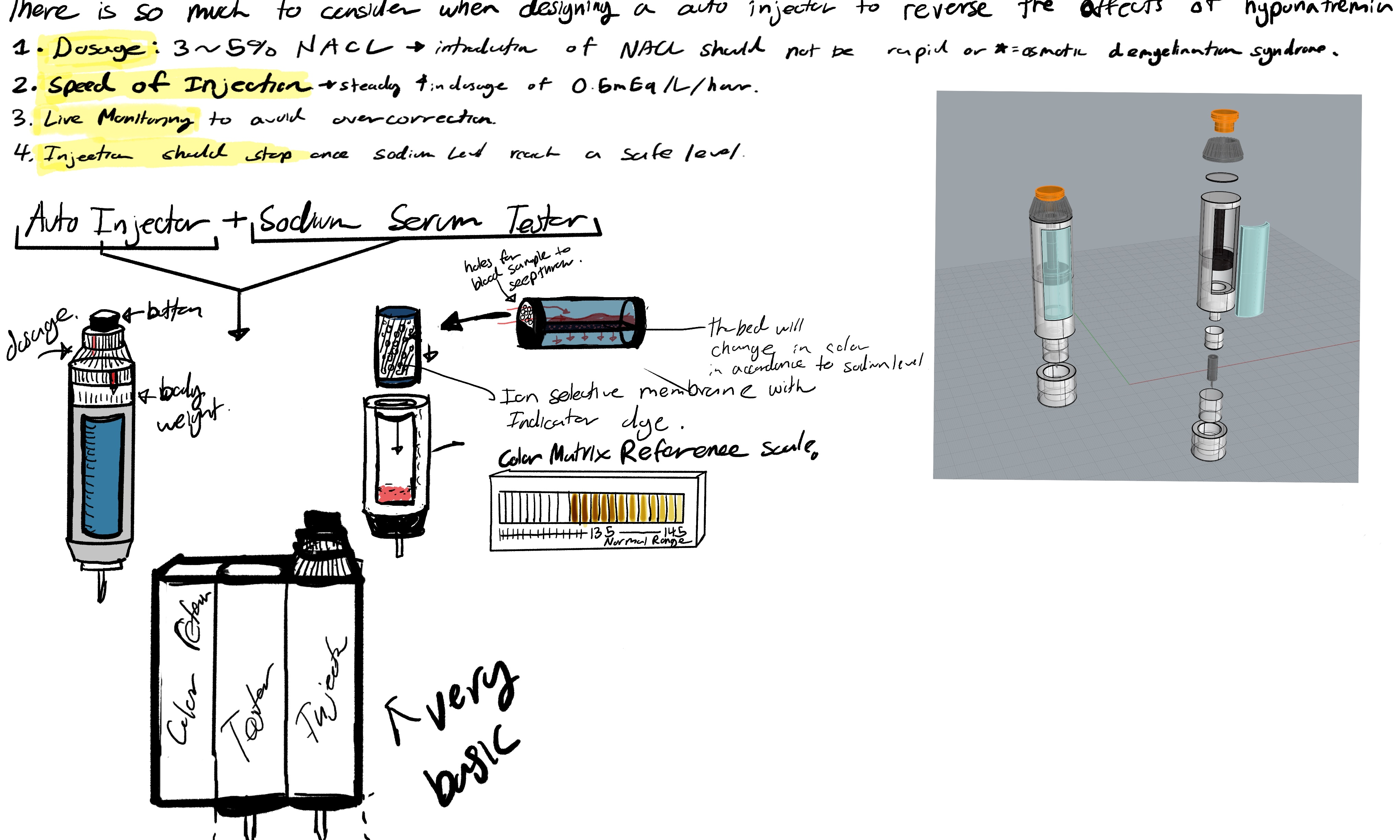
 (1).png)
Impact
Keeps care continuous by delivering multiple doses without interruption, allowing responders to stay focused on patients, not devices.
Form
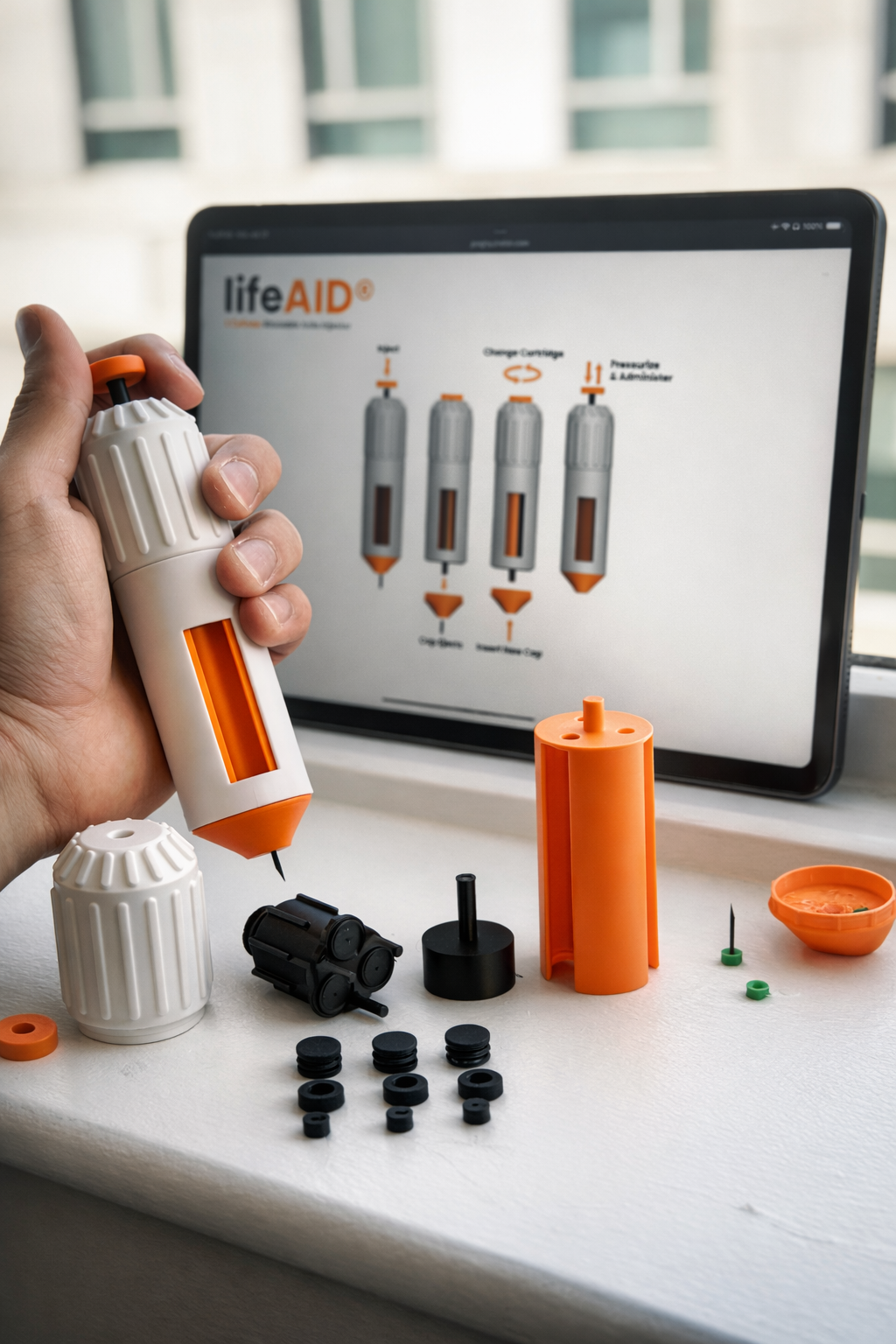
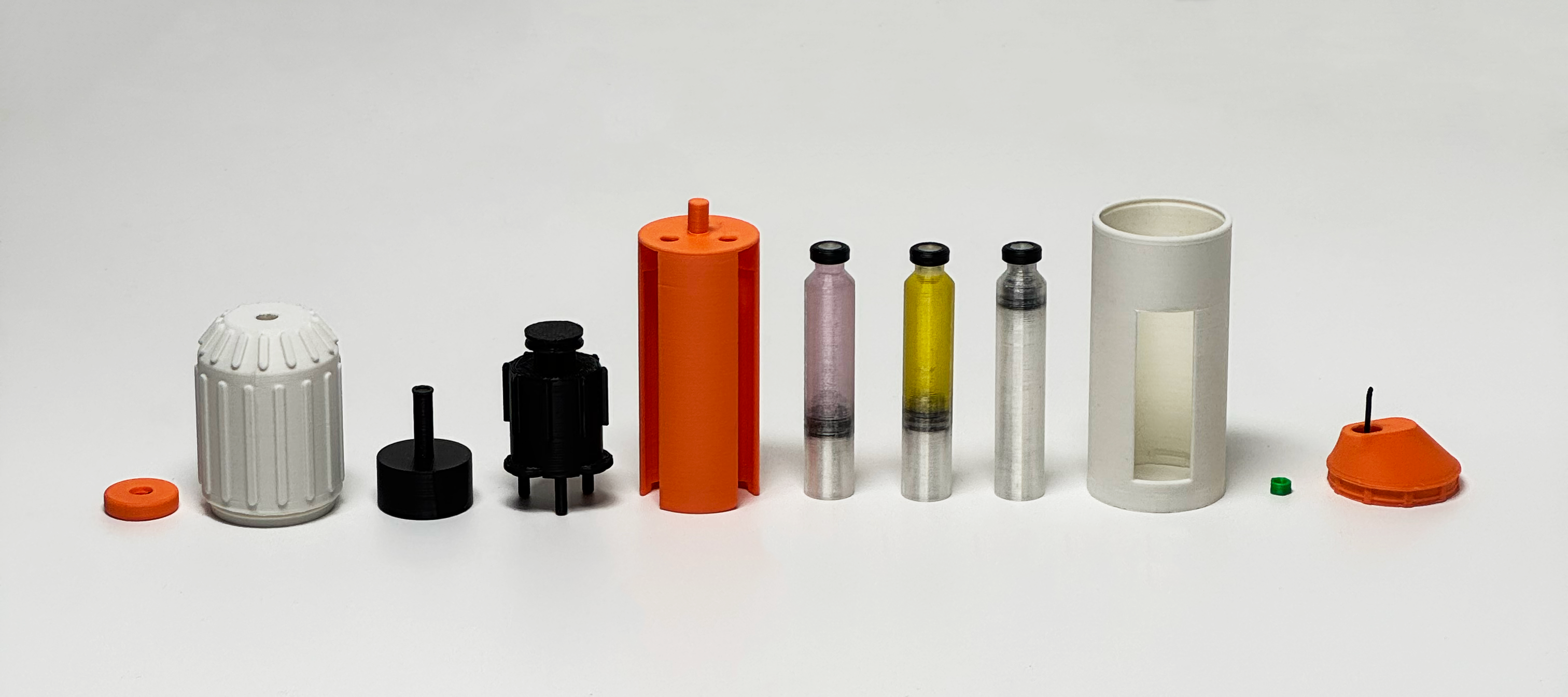
The cylindrical body efficiently houses three rotating cartridges and keeps each dose aligned to the same injection point. The form is driven by tight internal packaging and consistent external usability.
User Interview


Seamless Sequential Delivery
Instant Response
First dose fires immediately for rapid action.
Cartridge Reload
After each injection, replace the used needle cap. Then turn the Rotary Grip clockwise until it clicks and locks. The tactile and audible feedback confirms the next cartridge is ready.
Fast Priming
After three doses, the actuator resets upward. Pump three times until it locks, then rotate to unlock and LifeAID is ready again.
